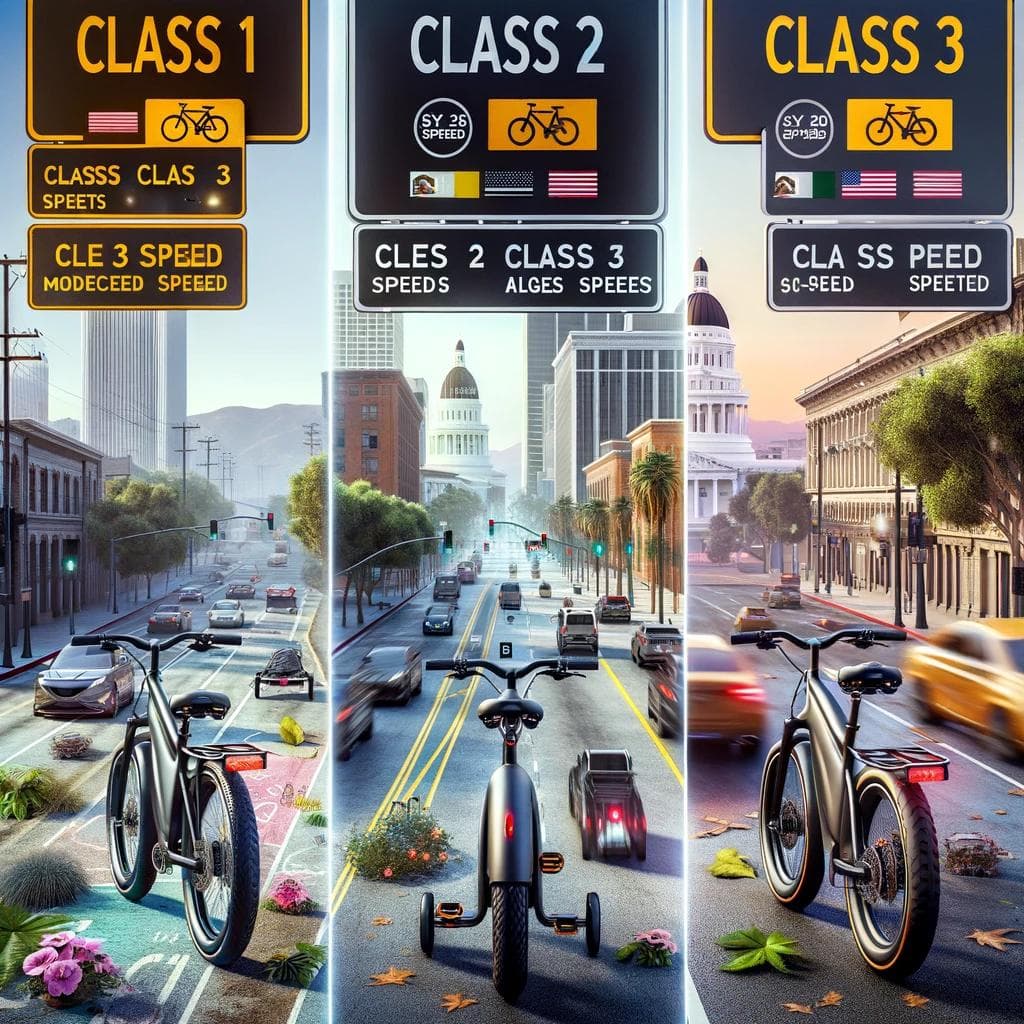
No — in nearly every US state, you do not need a driver's license, registration, or insurance to ride a Class 1, 2, or 3 electric bike. If your bike has operable pedals, a motor of 750 watts or less, and assists no faster than 20 mph (Class 1 and 2) or 28 mph (Class 3), the law treats it like a bicycle, not a motor vehicle.
That's the answer for the roughly 40 states that have adopted the three-class system, and it holds in most of the rest too. The catch is the boundary: the moment a two-wheeler exceeds those limits — more power, more speed, or a throttle that keeps pushing past the class cutoff — it stops being an e-bike in the eyes of the law and becomes a moped, motor-driven cycle, or motorcycle. Those absolutely require a license, and often registration, insurance, and a DOT-rated helmet.
So the real question isn't “do e-bikes need a license?” It's “is my bike legally an e-bike?” This guide covers where the line sits, the state-level exceptions and age rules, and why you might want insurance even though nobody requires it. For the full state-by-state picture, see our complete guide to electric bike laws by state.
Why Don't E-Bikes Require a License?
Because federal and state law deliberately classify them as bicycles, not motor vehicles. The 2002 federal law HR 727 defines a low-speed electric bicycle — under 750W, under 20 mph on motor power alone, with operable pedals — as a consumer product regulated like a bicycle, and state three-class laws extend that logic to road rules.
The policy rationale is simple: a 20-28 mph e-bike poses risks closer to a road bike ridden by a fit cyclist than to a 50 mph moped. Licensing every e-bike rider would create a huge enforcement burden with little safety payoff, so legislatures in state after state have written e-bikes out of the motor vehicle code. That's also why there's no minimum equipment like mirrors or turn signals, no VIN, and no title. You buy it, you ride it — the same day.
When Does an E-Bike Legally Become a Moped or Motorcycle?
When it exceeds the e-bike definition: more than 750 watts of motor power, assistance beyond 28 mph, or throttle-only operation beyond 20 mph. At that point most states classify it as a moped, motor-driven cycle, or motorcycle — and licensing, registration, and insurance requirements kick in.
This is where a lot of riders get burned in 2026. Plenty of bikes sold online — high-power “off-road” models, Sur-Ron-style electric motos, and anything advertised at 1,000W+ or 35+ mph — are not legal e-bikes anywhere in the US, no matter what the listing says. The same goes for “unlock modes” that remove the speed limiter: riding an unlocked bike on public roads generally means you're operating an unregistered motor vehicle without a license. Some states have started seizing out-of-class bikes ridden by unlicensed teens. Our guide to e-bike speed types and what to check before buying shows how to verify a bike's true class, and how fast e-bikes go explains what those caps feel like in practice.
Here's the quick reference:
| Vehicle | Power / Speed | License | Registration | Insurance |
|---|---|---|---|---|
| Class 1 e-bike | ≤750W, assist to 20 mph | No | No | No |
| Class 2 e-bike | ≤750W, throttle to 20 mph | No | No | No |
| Class 3 e-bike | ≤750W, assist to 28 mph | No | No | No |
| Moped / motor-driven cycle | Above e-bike limits | Yes | Usually | Usually |
| Electric motorcycle | High power, 30+ mph | Yes (M class) | Yes | Yes |
Are There Any States With License or Registration Exceptions?
As of 2026, no state requires a driver's license or registration for a standard Class 1 or Class 2 e-bike, but the history here is recent and a few quirks remain. Massachusetts, for example, required registration for “motorized bicycles” for years before its 2022 law carved out Class 1 and 2 e-bikes; its treatment of 28 mph bikes remains murkier than most states.
A handful of non-three-class states — think Alaska and New Mexico — still have statutory language that blends e-bikes with mopeds in places, and Pennsylvania and Oregon impose a 16+ age floor for any e-bike even though no license is needed. New York only legalized e-bikes statewide in 2020, and New York City layers on its own rules for delivery riders and battery certification. The pattern is clear: the country has converged on “no license needed,” but if you live in a state without the three-class system, spend five minutes on your DMV's website before assuming. Laws also differ abroad, which matters if you ride while traveling — as does whether you can take an e-bike on a plane in the first place (short answer: the battery is the problem).
How Old Do You Have to Be to Ride an E-Bike?
In most states: any age for Class 1 and 2, and at least 16 for Class 3. A few states differ — Texas allows Class 3 at 15, while Pennsylvania and Oregon require riders to be 16 for any e-bike, and Florida famously has no statewide minimum at all.
Age rules are the most actively legislated corner of e-bike law right now. After a wave of teen crash headlines, several California and Florida localities have added youth restrictions, helmet mandates, or education requirements that go beyond state law. If you're buying for a kid or teen, check both your state DOT and your city's municipal code, and consider sticking to Class 1 — it's the class with the fewest restrictions everywhere. Our e-bike size guide helps match smaller riders to appropriately sized bikes.
Do You Need Insurance for an E-Bike?
No state requires insurance for Class 1-3 e-bikes, but you should seriously consider it anyway. E-bikes are expensive, theft rates are high, and the liability picture is uglier than most riders assume.
Here's the trap: many homeowners and renters policies exclude “motorized vehicles” from theft and liability coverage, and insurers don't always agree that your e-bike counts as a bicycle even when state law says it does. A stolen $2,500 commuter or a collision where you injure a pedestrian at 28 mph can turn into a five-figure out-of-pocket problem. Standalone e-bike policies now run a few hundred dollars a year and cover theft, crash damage, and liability. We break down the coverage gaps in what your homeowners policy won't cover. If you're valuing a bike for coverage or resale, our used e-bike price calculator gives you a defensible number.
What About Modified or High-Power E-Bikes?
Modifying a legal e-bike past its class limits puts you right back in motor-vehicle territory — and unlike a factory moped, a modified e-bike usually can't be registered at all, which makes it street-illegal, full stop. Delimiting a Class 3 bike to assist past 28 mph, swapping in an oversized motor, or flashing firmware to remove the cutoff all void the bicycle classification.
It gets worse: modifications typically void your warranty and can void insurance coverage precisely when you need it. Several states now require sellers to label out-of-class bikes, and California has moved to penalize sellers marketing unlockable bikes as e-bikes. If you want more capability within the law, there are legitimate paths — better ergonomics, cargo capacity, tires, and battery range. See our guide to warranty-safe e-bike upgrades, and use the range calculator to figure out whether a bigger battery, not more speed, is what you actually need.
So What Do You Actually Need to Ride Legally?
Just three things in most states: a bike that genuinely fits its class label, a helmet if your age or class requires one, and awareness of where each class can ride. That's it — no paperwork, no plates, no DMV line.
That simplicity is a huge part of the e-bike value proposition: a vehicle that replaces car trips with none of the licensing overhead, and often with tax incentives or rebates sweetening the purchase. If you're weighing the math, our breakdown of whether e-bikes are worth it runs the numbers, and you can get rolling for surprisingly little — see the best e-bikes under $1,000.
Key Takeaways
- No US state requires a driver's license, registration, or insurance for a standard Class 1, 2, or 3 e-bike (≤750W, ≤20/28 mph).
- The legal line is the class definition: exceed 750W or the speed caps — by purchase or by modification — and your bike becomes a moped or motorcycle requiring a license.
- Age minimums are the main rider requirement: usually 16+ for Class 3, with Pennsylvania and Oregon requiring 16+ for any e-bike and Texas allowing Class 3 at 15.
- High-power “off-road” and unlockable bikes sold online are often not legal e-bikes anywhere in the US.
- Insurance isn't required, but homeowners policies often exclude e-bikes — standalone coverage is cheap relative to the risk.
- Rules change fast and cities add their own layers — verify with your state DMV or DOT, especially for Class 3 bikes and teen riders.