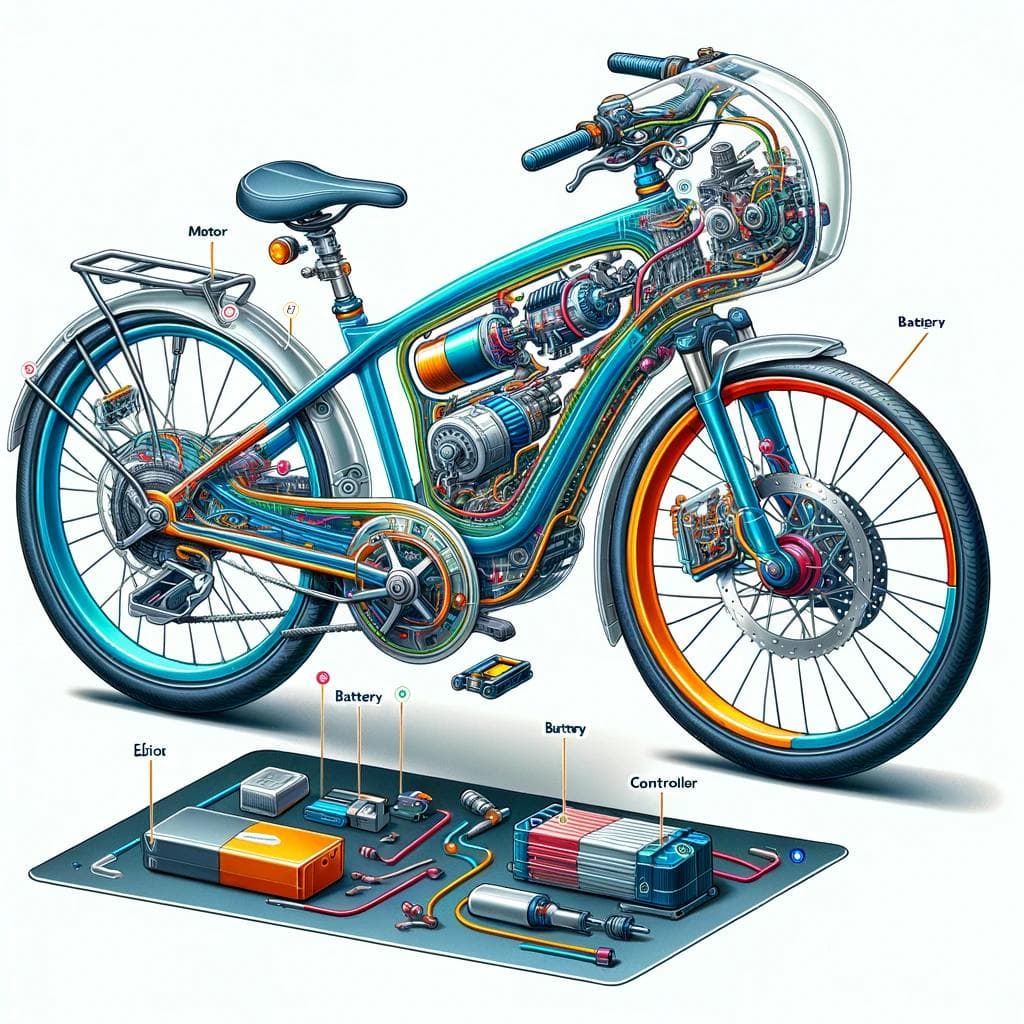
E-bike lithium-ion batteries should never go in the trash or regular recycling. They contain hazardous materials that can cause landfill fires and release toxic chemicals. Drop them off at designated collection points through the Call2Recycle program (HungryForBatteries.org) or at most e-bike dealers and battery retailers. Modern recycling recovers 95% of materials including lithium, cobalt, nickel, and copper.
Why Can't You Throw E-Bike Batteries in the Trash?
Lithium-ion batteries pose two serious risks in waste streams:
Fire hazard: Damaged or punctured lithium-ion cells can enter thermal runaway, reaching temperatures above 1,000 degrees Fahrenheit. Waste management facilities report that lithium-ion batteries cause an estimated 400+ facility fires per year in the U.S., according to the EPA. A single e-bike battery contains 40-60 individual cells, making it a significant fire risk if crushed in a garbage truck or compactor.
Toxic contamination: E-bike batteries contain cobalt, nickel, manganese, and electrolyte solvents that contaminate soil and groundwater when they break down in landfills. A single 500Wh battery contains enough cobalt (200-400g) to contaminate thousands of gallons of groundwater.
Where Can You Recycle an E-Bike Battery?
Option 1: Call2Recycle / HungryForBatteries.org (Free)
The PeopleForBikes foundation partners with Call2Recycle to operate the most extensive e-bike battery collection network in North America. Visit HungryForBatteries.org to find your nearest drop-off location. There are over 16,000 collection sites across the U.S. and Canada, including:
- Best Buy stores
- Lowe's and Home Depot locations
- Staples stores
- Many local bike shops
Option 2: Your E-Bike Dealer
Most authorized e-bike dealers accept old batteries for recycling, especially if you're purchasing a replacement. Bosch, Shimano, and Specialized all have take-back programs through their dealer networks.
Option 3: Municipal Hazardous Waste Collection
Your city or county likely runs periodic household hazardous waste collection events where e-bike batteries are accepted. Check your local government website for dates and locations. Some municipalities have permanent drop-off facilities.
Option 4: Battery Manufacturer Programs
Major battery brands are developing direct recycling programs:
- Bosch offers battery returns through authorized dealers
- Shimano accepts end-of-life batteries through service centers
- Specialized has a battery recycling partnership at all Specialized-owned retail stores
What Gets Recovered From a Recycled E-Bike Battery?
Modern lithium-ion recycling achieves 95% material recovery rates. Here's what comes out of a typical 500Wh e-bike battery:
| Material | Amount per Battery | Recovery Rate | What It Becomes |
|---|---|---|---|
| Lithium | 100-200g | 90-95% | New batteries, ceramics, glass |
| Cobalt | 200-400g | 95%+ | New battery cathodes |
| Nickel | 300-600g | 95%+ | Stainless steel, new batteries |
| Copper | 200-400g | 98%+ | Wiring, electronics |
| Aluminum | 500-800g | 95%+ | Casing, frames, cans |
| Graphite | 300-500g | 85-90% | New battery anodes |
A Stanford University study found that recycling lithium-ion batteries produces 58-81% fewer greenhouse gas emissions than mining virgin materials. As e-bike adoption grows (projected 12 million batteries sold annually in the U.S. by 2030), recycling becomes increasingly critical.
When Should You Replace Your E-Bike Battery?
E-bike batteries don't die suddenly. They gradually lose capacity over hundreds of charge cycles:
- 0-300 cycles: 100-90% of original capacity (normal performance)
- 300-500 cycles: 90-80% capacity (noticeable range reduction)
- 500-800 cycles: 80-60% capacity (significant range loss, time to consider replacement)
- 800+ cycles: Below 60% (replace for practical use)
Most riders reach 500 cycles in 3-5 years of regular use. If your battery range has dropped significantly, it's probably time to recycle the old one and buy a replacement. Proper winter storage and charging habits can extend battery life to 800+ cycles.
What to Do With a Swollen or Damaged Battery
A swollen battery is a fire hazard. Do not ignore it. If your battery looks puffed up, has a bulging case, or emits unusual heat or smells:
- Do not charge it under any circumstances
- Do not put it in the trash or regular recycling
- Place it in a fireproof container (metal bucket with sand) away from flammable materials
- Contact your local fire department for hazardous material disposal guidance
- Call your e-bike dealer for warranty replacement options
Never attempt to open, puncture, or disassemble a damaged battery. The electrolyte is flammable and toxic.
The Environmental Impact of E-Bike Batteries
E-bikes are significantly greener than cars, but their batteries have a real environmental footprint:
- Manufacturing: Producing a 500Wh battery generates roughly 70-100 kg of CO2
- Lifetime use: Charging an e-bike for 5 years produces approximately 50-75 kg of CO2 (U.S. grid average)
- Comparison: A gasoline car produces 4,600 kg of CO2 per year
Even accounting for battery manufacturing and disposal, an e-bike's lifetime carbon footprint is roughly 1/20th of a car's annual emissions. Proper recycling further reduces this by avoiding the environmental cost of virgin material mining.
FAQ
Q: Does recycling an e-bike battery cost anything? A: No. Drop-off at Call2Recycle locations, most dealers, and hazardous waste events is free. The recycled materials have enough value to cover processing costs.
Q: Can I recycle a battery from an e-bike I didn't buy at that shop? A: Most shops accept any brand of lithium-ion bike battery for recycling. Call ahead to confirm, but the industry norm is to accept all batteries.
Q: What if my battery still works but has reduced range? A: A battery at 60-80% capacity still works fine for shorter commutes. You can continue using it or sell the bike with honest disclosure about battery health. Check our guide on resale value for pricing used bikes with older batteries.
Q: Are there any e-bike battery trade-in programs? A: Some dealers offer trade-in credits ($50-$200) when you purchase a new battery. Bosch partners occasionally run promotional trade-in events. Check with your local dealer for current offers.
Key Takeaways
- Never put e-bike batteries in the trash. They cause facility fires and contaminate groundwater
- Drop off free at Call2Recycle locations (16,000+ sites), e-bike dealers, or hazardous waste events
- Modern recycling recovers 95% of materials including lithium, cobalt, nickel, and copper
- Replace your battery after 500-800 charge cycles (typically 3-5 years)
- Swollen or damaged batteries require immediate safe handling and professional disposal
- E-bikes produce roughly 1/20th the carbon footprint of a car, even including battery manufacturing